
Blog
Compostable vs Biodegradable Bags – What’s the Difference? (2026 Guide)
May
Introduction
When it comes to eco-friendly bags, two terms show up everywhere: compostable and biodegradable.
At first glance, they sound similar—but they are not the same.
Understanding the difference is important if you actually want to reduce plastic waste and choose products that align with your goals.
What Are Biodegradable Bags?
Biodegradable bags are designed to break down over time with the help of microorganisms like bacteria.
However, there’s a catch.
They don’t always break down completely, and in many cases, they can leave behind microplastics depending on the material used.
What Are Compostable Bags?
Compostable bags are made to break down into natural elements like water, carbon dioxide, and organic matter.
They do not leave toxic residue when processed properly.
However, most compostable bags require specific conditions—often found in industrial composting facilities.
Key Differences
Breakdown Process
- Biodegradable: breaks down over time, may leave residue
- Compostable: breaks down into natural elements
Environmental Impact
- Biodegradable: not always fully eco-friendly
- Compostable: generally safer for the environment
Conditions Required
- Biodegradable: varies
- Compostable: requires proper composting conditions
Which One Is Better?
In most cases, compostable bags are the better option if your goal is to reduce environmental impact.
However, they are only effective if disposed of correctly.
If composting isn’t available in your area, reusable bags may be the best long-term solution.
Best Use Cases
Compostable Bags
- Food scraps
- Light food storage
- Short-term use
Biodegradable Bags
- General use where composting isn’t available
- Light storage
Alternatives to Consider
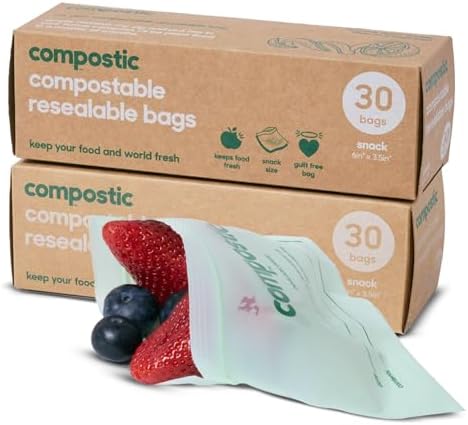
- SNACK SIZE FOR LUNCH BOXES: Sized for crackers, trail mix, grapes and cut veggies, so every portion fits neatly in a lun…
- DIN CERTCO CERTIFIED HOME COMPOSTABLE: Toss used bags in your backyard compost and they break down in 12 to 24 weeks, or…
- NON-TOXIC SNACK BAGS YOU CAN FEEL GOOD ABOUT: BPA free, non-GMO and tested by Intertek for direct food contact, so what …
- Reusable silicone bags
- Durable compostable brands
- Eco-friendly storage options
Common Mistakes
- Assuming biodegradable means eco-friendly
- Expecting compostable bags to work like plastic
- Not checking local composting options
Final Thoughts
Compostable and biodegradable bags are not the same, and choosing the right one depends on how you plan to use them.
For most people, compostable or reusable options provide the best balance between sustainability and practicality.
The difference between compostable and biodegradable bags comes down to how they break down and what they leave behind!
